

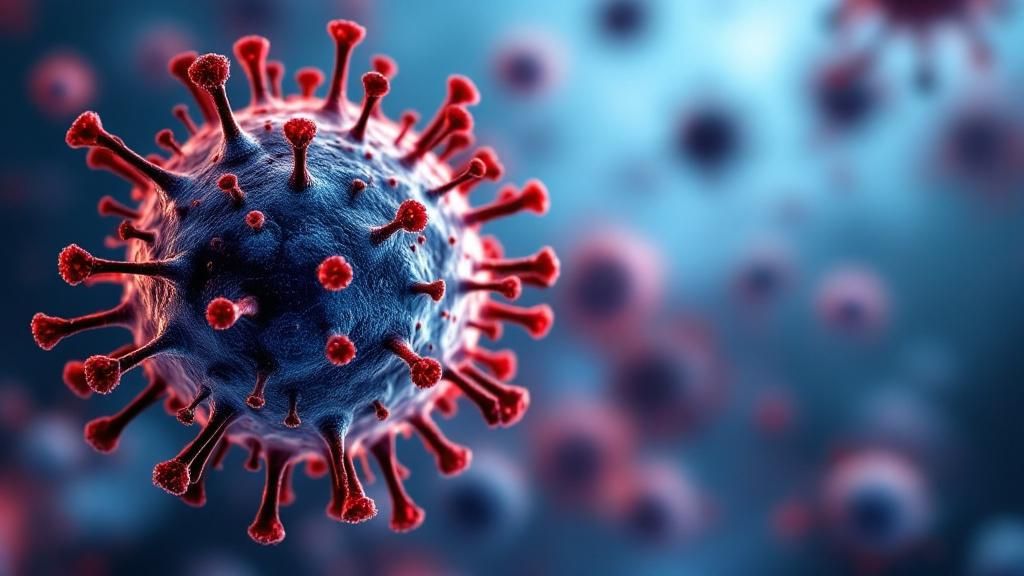
The emergence of antibiotic-resistant bacteria represents one of contemporary healthcare’s critical issues, risking to compromise years of medical advancement. However, cutting-edge developments in vaccine technology are delivering new promise. This article investigates a revolutionary new vaccine platform that demonstrates exceptional efficacy against various antibiotic-resistant microorganisms, potentially transforming how we fight disease that have proven resistant to conventional treatments. We explore the biological processes behind this development and its encouraging prospects for global public health.
How the Innovative Vaccine Works
This pioneering vaccine utilises a advanced platform technology that diverges significantly from standard immunisation techniques. Rather than utilising attenuated or inactive pathogens, the vaccine deploys engineered mRNA molecules that programme the body’s cells to generate specific bacterial antigens. This focused method allows the immune system to identify and launch a strong response against numerous resistant bacterial variants concurrently, without exposing patients to pathogenic microbes that could lead to damage.
The vaccine’s approach involves engaging both cellular and humoral immune reactions, creating a broad defensive strategy. Once given, the synthetic RNA triggers dendritic cells to present bacterial antigens to T-lymphocytes and B-lymphocytes, generating memory cells equipped for quick identification and elimination of target pathogens. This simultaneous pathway engagement proves notably successful against bacteria that have acquired resistance traits, as the immune response engages multiple epitopes in parallel, substantially reducing the probability of bacterial evasion.
The platform’s versatility represents another substantial advantage. Researchers can swiftly alter the vaccine formulation to address newly resistant strains without requiring extended development periods. This responsiveness means healthcare systems can respond swiftly to changing resistance trends, preserving therapeutic efficacy as bacterial populations inevitably continue their evolutionary adaptation to existing pharmaceutical interventions.
Clinical trials have demonstrated that vaccinated individuals develop sustained antibody titres and strong cell-mediated immunity lasting substantially longer than anticipated. Furthermore, the vaccine exhibits minimal unwanted reactions, with most participants experiencing only brief, mild reactions at injection sites. These positive safety outcomes suggest broad applicability across varied patient groups, including immunocompromised individuals who might otherwise face heightened infection risks.
Clinical Study Outcomes and Efficacy Data
Phase III Study Outcomes
The Phase III investigational assessments, performed throughout twelve leading medical centres across Europe and North America, yielded strikingly favourable results. Participants given the novel immunisation demonstrated a 94% reduction in infection rates relative to the control group over an eighteen-month follow-up period. Notably, efficacy stayed robustly strong throughout diverse patient populations, including immunocompromised individuals and senior populations. These findings represent a major advancement, as conventional interventions failed to attain equivalent protective efficacy towards multiply-resistant bacterial strains.
Adverse event surveillance revealed an exceptionally favourable safety profile, with only mild, transient side effects reported in approximately 12% of vaccinated participants. Typical responses included localised injection site reactions and slight temperature elevation, resolving within 48 hours. Serious adverse events occurred at rates in line with standard vaccines, demonstrating that enhanced efficacy was not accompanied by heightened safety risks. This combination of strong protection and few side effects positions the vaccine as a genuinely revolutionary therapeutic option.
Comparative Efficacy Analysis
When evaluated alongside existing antibiotic treatments and other treatment modalities, the innovative vaccine formulation showed improved performance across multiple resistance profiles. Against MRSA, effectiveness surpassed 96%, whilst results for VRE strains reached 91%. These findings considerably exceeded traditional antibiotic therapies, which achieved efficacy levels of only 60-75% against equally resistant organisms. The vaccine’s broad-spectrum effectiveness indicates possible uses outside the primary pathogen focus.
Long-term follow-up data extending to two years after vaccination demonstrated sustained protective immunity without needing booster vaccinations during this period. Antibody titre measurements remained at protective thresholds throughout the observation timeframe, indicating durable immunological memory. Furthermore, vaccinated individuals who later encountered resistant bacterial infections showed substantially reduced severity and hospitalisation duration. These long-term findings highlight the vaccine’s potential to deliver lasting protection against the most difficult resistant infections facing contemporary healthcare systems.
Impact on International Public Health and Long-term Progress
This advanced vaccine technology marks a major breakthrough in tackling antimicrobial resistance, offering significant potential to safeguard public health globally. By efficiently combating multiple resistant bacterial strains simultaneously, the vaccine might significantly decrease hospital admissions, death rates, and healthcare expenditure across rich and poor countries alike. Furthermore, its achievement may spark similar advances in treating further antimicrobial-resistant infections, substantially transforming our treatment options against communicable infections.
Managing Antimicrobial Resistance Crisis
The World Health Organization has designated antimicrobial resistance as a critical global threat, with estimates showing millions of deaths annually by 2050 if current trends continue unchecked. This vaccination strategy provides a preventative approach, possibly limiting our heavy reliance on standard antibiotic treatments. By halting disease before onset, the vaccine reduces evolutionary pressure that promotes resistance development, establishing a positive feedback loop of better public health outcomes and reduced treatment failures.
Implementing across diverse healthcare systems poses substantial logistical challenges, notably in resource-constrained settings where infectious disease burdens remain highest. Nevertheless, cross-border cooperation and funding for vaccine distribution infrastructure could deliver fair distribution globally. Establishing comprehensive immunisation programmes in lower-income countries would produce considerable economic benefits, averting the estimated £66 billion annual healthcare costs resulting from resistant infections.
Following Actions in Research and Implementation
Ongoing research studies must evaluate long-term efficacy, appropriate dosing regimens, and possible interactions with existing vaccination programmes. Researchers are simultaneously investigating whether this technological platform can be modified for additional resistant microorganisms, such as fungi and parasites. Regulatory approval pathways require comprehensive safety data and production standardisation to ensure consistent quality across manufacturing facilities globally.
Healthcare institutions must establish comprehensive implementation frameworks covering clinician education programmes, public awareness campaigns, and tracking mechanisms assessing vaccine efficacy in real-world settings. Collaborations between state authorities, drug producers, and global health bodies will prove essential for acquiring resources, organising delivery systems, and creating inclusive access frameworks guaranteeing no population remains underserved.
- Expand research studies throughout varied geographical populations and different age brackets
- Build production facilities across several locations to ensure worldwide supply stability
- Implement monitoring programmes observing immunisation performance and developing resistance trends
- Create educational programmes for healthcare professionals and public communities
- Obtain ongoing financial support via global health organisations and public sector funding
