

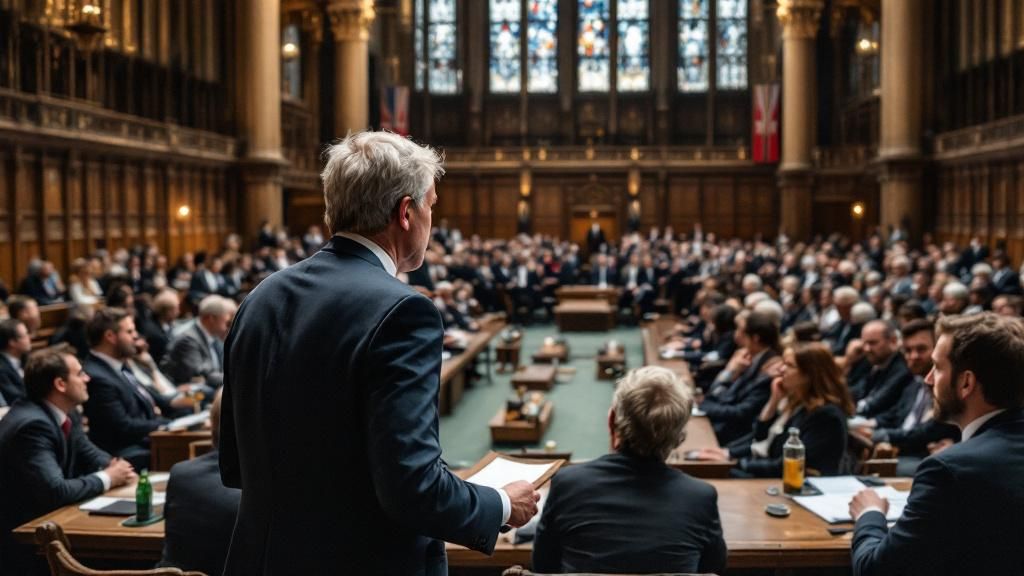
Parliament has descended into heated debate over proposed changes to the nation’s immigration framework, with broad agreement across parties proving difficult to achieve. Whilst some MPs champion stricter border controls and reduced net migration figures, others warn of potential economic and social consequences. The government’s recent legislative measures have exposed significant rifts within both major parties, as rank-and-file MPs raise worries ranging from labour market impacts to social cohesion. This article examines the competing arguments, major stakeholders’ views, and the political consequences of this contentious policy battle.
The Government’s Proposed Immigration Policy Framework
The government’s updated immigration system constitutes a extensive overhaul of existing border management and visa processing systems. Ministers have positioned the measures as a realistic response to public anxiety about migration figures whilst upholding the UK’s competitiveness in attracting skilled workers and global expertise. The framework includes reforms to points-based systems, sponsorship criteria, and settlement routes. Officials contend these initiatives will deliver improved control over migration patterns whilst supporting key sectors experiencing workforce shortages, notably healthcare and social care provision alongside the technology sector.
The proposed framework has sparked substantial parliamentary examination, with MPs questioning both its practicality and core assumptions. Critics maintain the government has miscalculated delivery expenses and likely regulatory pressures on organisations and state bodies. Supporters, by contrast, stress the need for firm measures on border regulation, citing public sentiment research showing general unease about swift population shifts. The framework’s effectiveness will largely depend on departmental capacity to manage requests efficiently and enforce compliance across the business community, areas where earlier migration initiatives have faced significant difficulties.
Key Policy Goals
The government has recognised five core objectives within its migration policy. First, reducing net migration to manageable levels through enhanced visa standards and strengthened border controls. Second, emphasising skilled migration matching recognised skills shortages, particularly in healthcare, engineering, and scientific research sectors. Third, strengthening community integration by introducing enhanced English language requirements and citizenship assessments for those seeking permanent residence. Fourth, addressing illegal entry through expanded enforcement capacity and international cooperation agreements. Fifth, preserving Britain’s appeal as a destination for legitimate business investment and academic exchange.
These objectives reflect the government’s effort to balance conflicting priorities: satisfying backbench MPs pressing for more stringent immigration controls whilst preserving economic interests requiring access to global talent. The framework clearly prioritises points-based evaluation over family reunification routes, fundamentally altering immigration categories. Ministers have emphasised that intended modifications correspond with post-Brexit policy autonomy, allowing the United Kingdom to develop distinctive immigration rules free from European Union precedent. However, implementation of these objectives faces substantial parliamentary opposition, notably regarding settlement restrictions and family visa modifications which human rights groups have criticised as unduly harsh.
Deployment Schedule
The government outlines a gradual deployment timeline spanning eighteen months, beginning with legislative passage and regulatory development. Phase one, commencing immediately upon royal assent, centres on establishing new visa processing infrastructure and upskilling immigration officials. Phase two, planned for months four through nine, implements reformed points-based criteria and employer sponsorship adjustments. Phase three, finishing the implementation period, introduces enhanced border security technologies and integration requirement enforcement. The government projects it requires approximately £250 million for system improvements, additional staffing, and cross-border coordination frameworks, though external experts suggest actual costs could significantly surpass government projections.
Timeline viability remains contested within Parliament, with opposition parties questioning whether eighteen months provides sufficient preparation for such comprehensive changes. The Home Office has previously encountered significant delays implementing immigration reforms, creating scepticism regarding delivery commitments. Employers’ organisations have cautioned that compressed schedules create uncertainty for sponsorship applications and staffing strategies. Furthermore, parliamentary procedures themselves may prolong the legislative process beyond government expectations, particularly if amendments become required following thorough examination. The implementation timeline’s success will ultimately rely upon multi-party collaboration and adequate resource allocation, neither of which currently appears assured given existing political divisions surrounding immigration policy.
Opposing Viewpoints and Objections
Labour opposition spokespeople have raised substantial objections to the government’s immigration proposals, arguing that more stringent measures could undermine the UK economy and vital public services. Shadow ministers argue that healthcare, social care, and hospitality sectors require substantial numbers of migrant workers, and lowering immigration numbers may exacerbate existing workforce shortages. Opposition frontbenchers highlight that the approach does not tackle underlying skills gaps and demographic issues facing Britain, instead presenting oversimplified answers to intricate systemic issues that demand thorough, data-driven strategies.
Beyond Labour, the Liberal Democrats and Scottish National Party have articulated concerns regarding human rights implications and the treatment of asylum seekers under the proposed framework. These parties argue the legislation is deficient in proportionality and sufficient safeguards for at-risk groups. Additionally, several backbench MPs from multiple parties worry about enforcement costs and bureaucratic burdens on businesses. Non-governmental organisations and immigration charities have similarly warned that the policy fails to properly address integration support and may disadvantage already vulnerable communities through discriminatory provisions.
Economic and Social Implications
The suggested immigration policy adjustments carry significant economic consequences that have triggered substantial debate amongst economic experts and industry figures. Tighter restrictions could reduce labour shortages in critical sectors including healthcare, agriculture, and hospitality, possibly impacting economic growth and productivity. Conversely, supporters contend that regulated migration would ease pressure on public services and the housing market, ultimately benefiting sustained economic stability and allowing wages to stabilise in less-skilled sectors.
Socially, the policy’s implementation raises key questions concerning social cohesion and integration. Critics contend that restrictive measures may breed divisiveness and erode Britain’s diverse cultural identity, whilst proponents contend that controlled immigration supports better integration processes and reduces strain on local services. Both perspectives acknowledge that effective immigration policy requires striking a balance between economic requirements with long-term social viability, though disagreement persists regarding where that balance should be determined.
